Cleaning How-To
How to Keep Your House Clean With a Newborn: What Matters Most and What Can Wait
Published
A new baby changes how your home is used and how much uninterrupted time you have. The aim is not a spotless home, but a manageable one that supports your family's new routine.
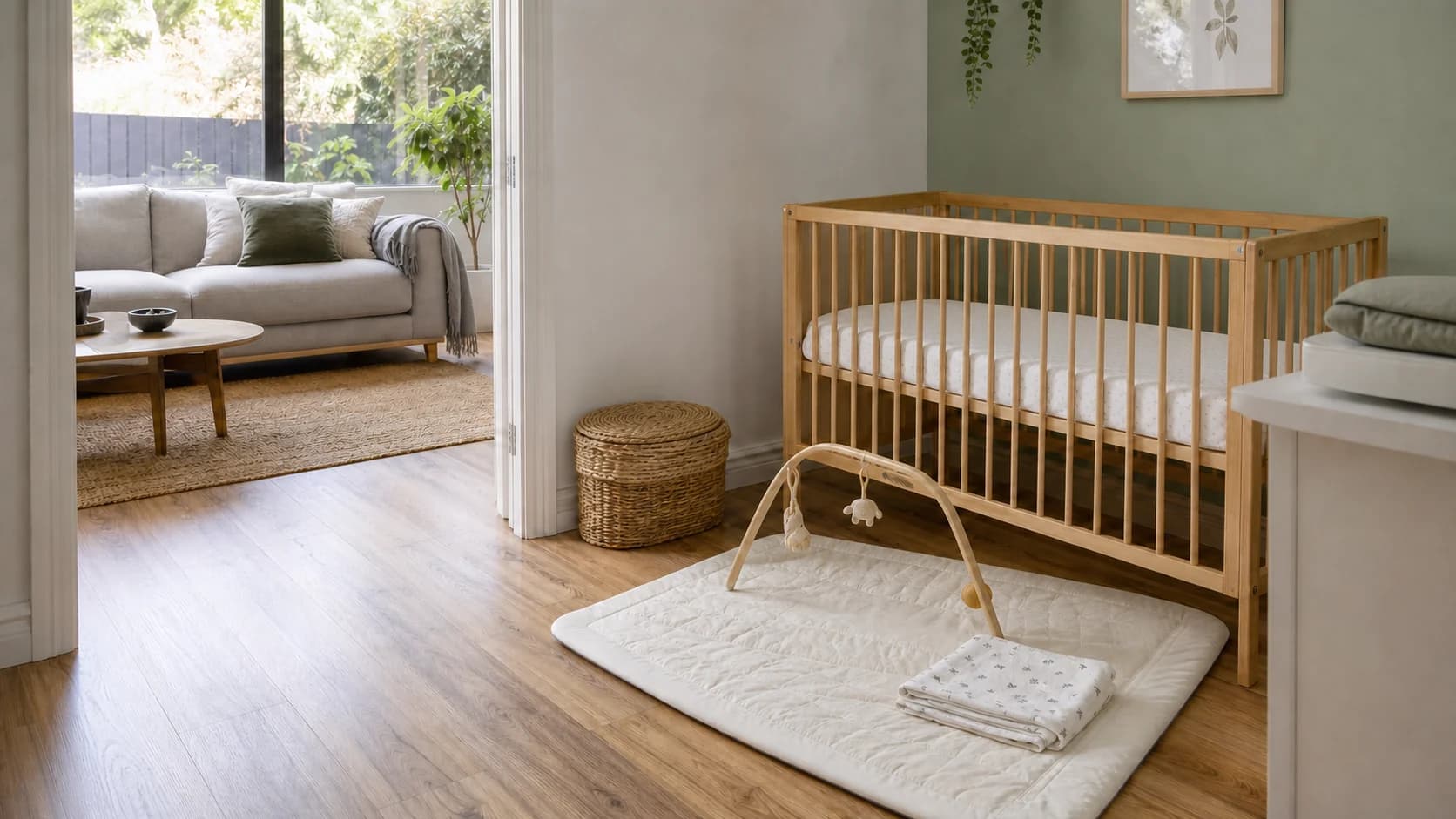
What matters most
When time is limited, start with the areas your family uses most often.
| Priority area | What to focus on | Practical approach |
|---|---|---|
| Baby's room | Accessible surfaces and floors | Dust accessible surfaces, then vacuum and mop the floor as appropriate |
| Kitchen | Benches, sink, cooktop exterior and visible spills | Clear and wipe the main food-preparation areas |
| Bathrooms | Toilet, basin, shower and frequently used surfaces | Complete one proper clean rather than several partial attempts |
| Floors | Main walkways and areas used around the baby | Vacuum first, then mop suitable hard floors |
| Feeding and changing areas | Nearby floors and ordinary household surfaces | Deal with visible spills promptly without treating baby equipment as part of the household clean |
A note from Swiepp
From Swiepp's experience cleaning for expecting and new-parent households in Melbourne, the baby's room is commonly the first area clients ask us to prioritise.
That does not mean every item in the room needs detailed cleaning. Regular dusting of accessible surfaces, followed by vacuuming and mopping the floor, provides a practical starting point.
Before your baby arrives
A realistic cleaning plan can be simple:
- •Choose the three areas you want maintained most consistently.
- •Prepare the baby's room without trying to detail every item.
- •Decide which everyday jobs will remain with the household.
- •Move oven cleaning, windows and other detailed work to a separate list.
- •Consider whether a one-off reset or regular cleaning rhythm better suits your needs.
- •Tell your cleaner which room should be prioritised and whether any areas should be avoided.
You do not need to complete an enormous nesting checklist. Start with the parts of the home that will make everyday life easier.
Adjust the priorities as your baby grows
The parts of the home needing the most attention may change during the first year.
- •Early newborn stage: focus on the baby's room and the areas used for feeding and changing.
- •Floor-time stage: give more attention to the living-room floor and play area.
- •Crawling stage: expand the floor-cleaning priority to the routes your baby regularly uses.
Toys, bottles and baby equipment should be cleaned according to their individual care instructions. These items sit outside a standard Swiepp home clean.
What can usually wait
When the essential areas are under control, these detailed jobs can generally move to a later clean:
- •Inside the oven
- •Windows
- •Skirting boards
- •Inside cupboards and drawers
- •Detailed dusting in low-use rooms
- •Cosmetic marks that do not affect everyday use
These jobs are not unimportant. They simply do not need to compete with the areas your family relies on every day.
If one develops a specific spill or problem, move it back up the priority list.
A realistic DIY routine
Avoid trying to deep-clean the entire house whenever you find a spare hour.
Small daily reset
- •Clear the main kitchen bench.
- •Wipe visible food and feeding spills.
- •Empty rubbish when needed.
- •Keep the most frequently used floor areas clear.
- •Stop once the immediate mess is manageable.
Weekly core clean
- •Clean the main bathroom and toilet.
- •Vacuum the high-use areas.
- •Mop suitable hard floors.
- •Dust accessible surfaces in the baby's room.
- •Complete one additional task only if time allows.
If the weekly clean cannot be finished, leave the oven, windows and detailed work for another time. There is no need to turn every missed task into a larger catch-up clean.
How regular cleaning can help new parents
A regular cleaning service does more than complete individual tasks. It gives the household a predictable cleaning rhythm when daily life is difficult to schedule.
- •Less need to find a large block of time for cleaning
- •Fewer essential jobs developing into a major catch-up clean
- •Kitchens, bathrooms and floors being maintained consistently
- •More time available for the baby, rest, work or other household needs
- •Cleaning priorities that can change as the baby begins spending more time on the floor
- •Less weekly discussion about who will handle the main cleaning tasks
| A standard Swiepp clean can cover | Not included |
|---|---|
| Vacuuming and mopping | Cleaning or sanitising toys |
| Bathrooms and toilets | Washing or sanitising bottles |
| Kitchen benches, sink and cooktop exterior | Cleaning specialised baby equipment |
| General dusting of accessible surfaces | Laundry or changing bed linen |
| Mirrors, cobweb removal and rubbish emptying | Household organising |
| General dusting and floor cleaning in the baby's room | Childcare, maternity or medical support |
Exact priorities are agreed for the home before cleaning begins. Selected baby-related essentials may be requested separately through Swiepp Care's delivery service, subject to availability. Delivery is an ongoing-care extra and is not part of the cleaning scope.
A manageable home is enough
Your cleaning priorities will change as your baby grows. Keep the essential areas moving, reduce the frequency of less important jobs, and use outside support when it genuinely gives your household useful time back.
Swiepp takeaway
A manageable routine protects the areas your family uses most and lets lower-priority work wait until there is genuinely time for it.
Related guides
Service areas
Swiepp provides structured residential cleaning across selected Melbourne suburbs.
View all service areas